A Complete Guide to Lanzarote’s Finest Stretch of Coast
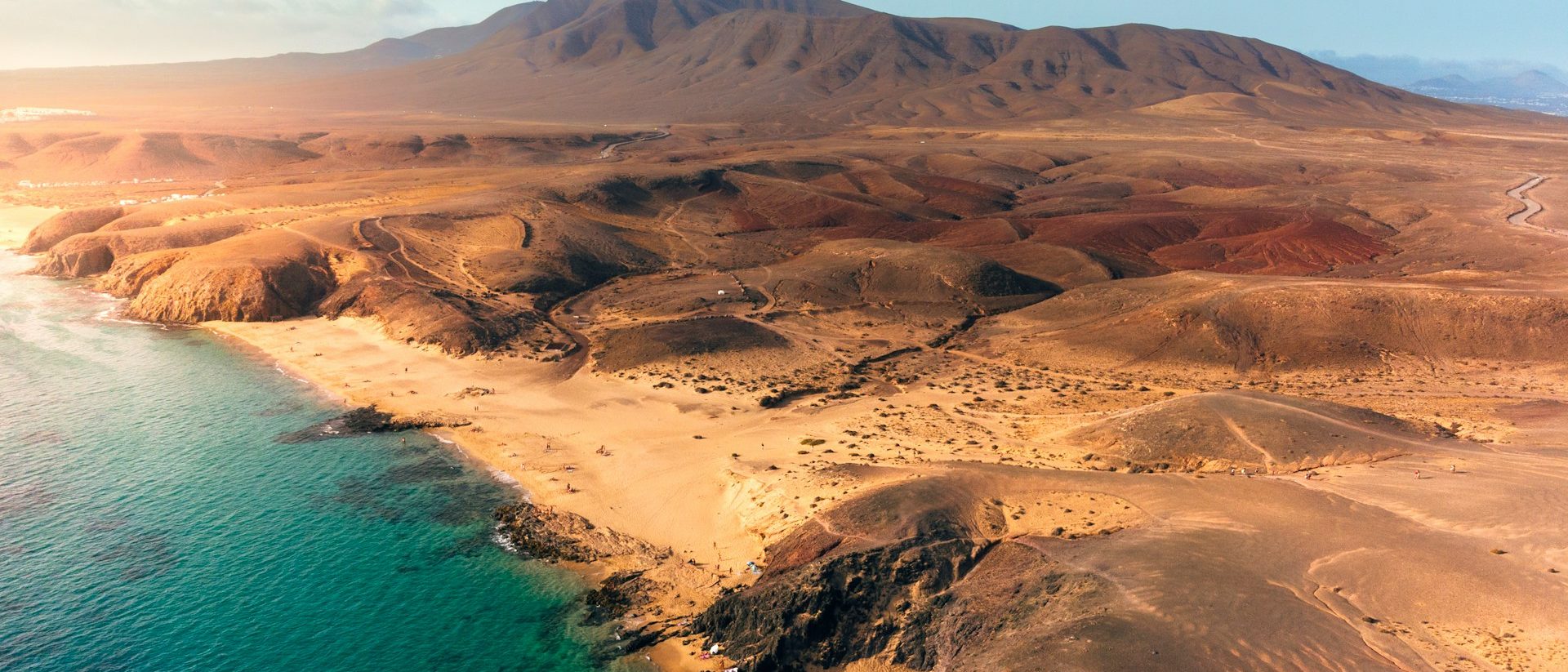
Ask anyone who knows Lanzarote to name the best beach on the island and the answer, nine times out of ten, is Papagayo. What fewer visitors realise before they arrive is that Papagayo isn’t one beach at all. It’s a string of golden sand coves strung along the southern tip of the island, separated by low headlands and cliffs, each with its own character, and all of them sitting inside the protected Los Ajaches Natural Monument. The water is calm, clear and somewhere between turquoise and emerald depending on the light, the sand is pale gold, and the backdrop is the rounded volcanic hills of the oldest landscape on Lanzarote. On a still day it’s as close to the postcard ideal as the Canary Islands get.
Because the whole area is protected, there are no hotels, no promenades, no sunlounger concessions and no shops. Two beach bars above the main cove are the only services for miles. That’s precisely the appeal, but it also means a Papagayo day needs a little planning. This guide covers each of the coves individually, the different ways to get there, what to bring, and the bits of history hiding in the landscape that most visitors walk straight past.
Where Papagayo Is and Why It Looks the Way It Does
The Papagayo beaches occupy the coastline east of Playa Blanca, around the southernmost point of Lanzarote, in the municipality of Yaiza. The whole area falls within the Monumento Natural de Los Ajaches, and the geology here is worth a moment of your attention, because you’re standing on the oldest part of the island. The Ajaches massif emerged from the ocean somewhere in the region of 14 to 15 million years ago, long before the dramatic eruptions that shaped Timanfaya, which is why the hills here are rounded and weathered rather than sharp and raw. Erosion has had a very long time to work, carving the deep ravines and the sheltered coves that make the beaches what they are.

Those headlands do a practical job too. The trade winds that keep the rest of the island breezy are largely blocked by the cliffs and hills, which is why the water at the sheltered coves stays so calm. On days when Famara in the north is a wall of wind and whitewater, the main Papagayo cove can be as still as a swimming pool. That shelter, combined with the gently shelving sand and the absence of any meaningful current on calm days, is what makes these beaches so well suited to families and snorkellers.
The Coves, One by One
Travelling from Playa Blanca towards the point, the beaches come in a rough sequence, and knowing the running order helps you pick your spot.
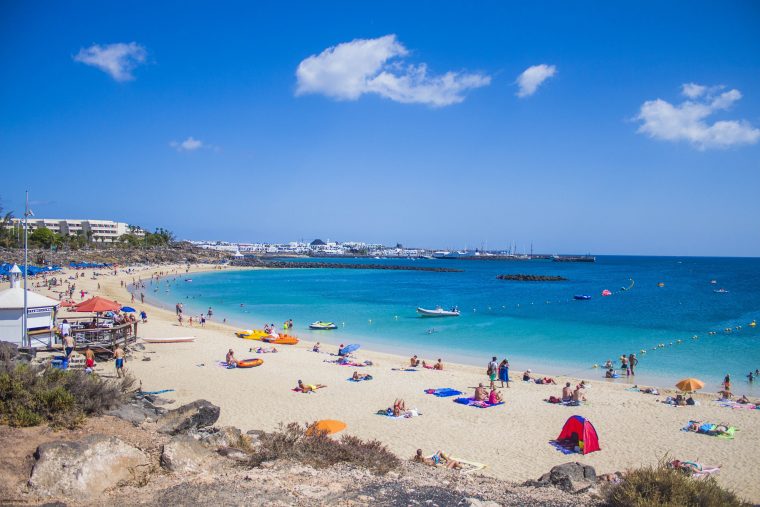
Playa Mujeres is the first and the largest, a 400-metre sweep of pale sand with views across the water to Isla de Lobos and Fuerteventura. Because it’s the biggest and the closest to Playa Blanca, it absorbs crowds better than any of the others, and even on a busy day you can usually find space. It has its own parking area, and an old lime kiln tucked under one of the flanking hills for anyone who likes their beaches with a bit of industrial archaeology. If you’re walking in from Las Coloradas, this is the beach you reach first, in around ten to fifteen minutes.
Beyond Mujeres come a couple of small rocky inlets, Caletón del Cobre and Caletón de San Marcial, that most people pass by, followed by Playa del Pozo, a generous stretch of sand with parking close by and an easy walk to the beach bars if lunch calls. It tends to be quieter than the headline cove and is a solid choice if you want space without sacrificing convenience.
Playa de la Cera is the small one, and for many regulars the pick of the lot. A pocket of sand wedged between two hills with a central cliff, it’s beautifully protected from the wind and arguably the most photogenic of the whole chain. Yaiza council has installed a long walkway with a handrail down to the sand in recent years, which has made access far easier than it used to be. Its size is its only limitation. Arrive late on a summer morning and there may simply be nowhere left to put a towel.
Playa de Papagayo is the famous one, the shell-shaped cove that appears on the front of every Lanzarote brochure. Enclosed by cliffs on both sides so that it seems almost to close around the water, it’s superbly sheltered, the sand is soft, and the swimming is as good as anywhere in the Canaries. Steps with a handrail lead down from the clifftop, another recent and welcome improvement, and the two beach bars sit on the hillside just above, a short climb of forty or fifty metres from the sand. It’s the busiest of the coves for obvious reasons, and in high season it fills up properly. Go early, or go late in the afternoon when the day trippers thin out and the light turns golden.
Caleta del Congrio and Puerto Muelas round off the chain, and they’re the ones to head for if solitude is the goal. Both face east rather than south, which makes them more exposed when the wind has any east in it, but also quieter by a distance. There are no bars, no facilities and often not many people. These easterly beaches are also where nudism is most established. Naturism is embraced across the Papagayo area generally, but it’s the far coves and the quieter ends of the beaches where it’s the norm, so nobody should arrive at Congrio or Puerto Muelas unaware. The official Papagayo campsite sits behind this end of the coastline, typically operating in summer and over Easter, with pitches arranged through Yaiza council. Falling asleep to the Atlantic in a protected natural monument for a few euros a night is one of the island’s great underrated experiences.
Getting There by Car
There are no paved roads inside the natural monument, which is a deliberate choice and a large part of why the area still looks the way it does. Drivers follow the signs from Playa Blanca (the route is signposted off the LZ-701/LZ-702 side of town towards Femés) to a control booth at the entrance to the park, where non-residents pay €3 per vehicle for the day. From there, a network of dirt tracks fans out to parking areas serving the various coves, so you can drive to within a short walk of whichever beach you fancy.
Two honest warnings about the track. First, it’s rough. Potholed, washboarded in places, and best taken slowly, though perfectly passable in an ordinary small car if you’re patient. Second, and more importantly, check your hire car agreement before you drive it, because many Lanzarote rental contracts exclude unpaved roads entirely. If that’s the case and something goes wrong out there, the recovery costs land on you. Plenty of people drive it daily without incident, but go in with your eyes open.
Getting There on Foot, by Bus or by Boat
The good news for anyone without a car is that walking in is free, and genuinely pleasant. The coastal path starts from Las Coloradas at the eastern edge of Playa Blanca, behind the Sandos Papagayo hotel, and the number 30 local bus runs from the centre of Playa Blanca out to Las Coloradas if you want to skip the urban stretch. From there it’s around fifteen minutes on foot to Playa Mujeres and roughly two kilometres to the main Papagayo cove, on a wide coastal trail with sea views the whole way. Take water and sun protection, because there’s no shade at any point, and remember you’ll be walking back at the end of a day in the sun.
By sea, a water taxi runs from Playa Blanca harbour and Marina Rubicón across to the beaches during the summer months, which turns the journey itself into part of the day out. The popular catamaran cruises from Puerto del Carmen, Puerto Calero and Playa Blanca also anchor in the Papagayo bays for swimming and snorkelling stops, though it’s worth knowing that most of them stay at anchor offshore rather than landing, so you’ll be swimming from the boat rather than sunbathing on the sand.
Visiting Papagayo? Here is what you need to bring.
The golden rule of a Papagayo day is self-sufficiency. Beyond the two bars at the main cove there are no shops, no sunbeds, no umbrellas for hire and precious little natural shade, so bring everything: plenty of water, food if you’re not planning on the bars, high-factor sunscreen, hats, and ideally a beach umbrella of your own. The bars themselves serve honest local food with a spectacular view, priced a notch above what you’d pay in town, which given the location is hardly a scandal. Be aware that non-customers are charged to use their toilets. Rubbish bins are provided at the car parks, and taking your litter out with you is not optional in a protected natural space.
The swimming and snorkelling are the stars of the show. The sheltered coves have calm, clear water with good visibility around the rocky edges of each bay, where the fish life congregates. Conditions are family-friendly on the sheltered south-facing beaches in normal weather, though the usual sea rules apply, and the east-facing coves are noticeably more exposed when the wind swings around. Sunset from the clifftop by the bars, looking down over the main cove with Fuerteventura on the horizon, is one of the finest free spectacles on the island and reason enough to structure your day around a late finish.
The Six-Hundred-Year-Old Secret in the Landscape
One last thing worth knowing, because almost everyone sunbathes within a few hundred metres of it without ever realising. This stretch of coast is where European history in the Canary Islands began. In 1402, the Norman conqueror Jean de Béthencourt landed here and established San Marcial del Rubicón, the first European settlement anywhere in the archipelago, complete with a chapel, a tower and a set of wells. The archaeological site survives within the natural monument, with the wells still visible and excavation work continuing to piece together the story of the conquest and the indigenous islanders who were here first. The area’s network of marked walking trails, ten routes maintained by Yaiza council with three covering the beach area, threads past fossil beaches and the site itself, and adds a genuinely interesting dimension for anyone who fancies stretching their legs between swims.
Making the Most of a day on the Papagayo Beaches
The pattern that works best is simple. Arrive early, ideally before ten in high season, choose your cove while there’s still space to choose, and get your swimming in during the calm of the morning. Retreat to the bars or your own shade through the fiercest hours, wander the clifftop paths for the views along the whole chain of coves, then settle in for the late afternoon when the crowds thin, the light softens and the beaches quietly become themselves again. Done that way, a day at Papagayo isn’t just a beach day. It’s the best of Lanzarote, its geology, its history and its coastline, condensed into one small and very beautiful corner of the island.