Things to do in Lanzarote
Lanzarote packs an extraordinary amount into a small island. In a single week you can climb a volcano, swim at some of the best beaches in Europe, drink wine grown in black volcanic ash, watch cyclists tackle one of the toughest routes on the IRONMAN circuit, hop across to a smaller island that feels untouched by time, eat at a Michelin-recommended restaurant, and finish the day watching the sun set from a cliff-top viewpoint 400 metres above the Atlantic. Few destinations in Europe deliver that kind of range.
Whether you’re planning your first visit or your fifteenth, this guide covers everything worth doing on the island. From the big-name attractions at Timanfaya National Park, Jameos del Agua and the César Manrique sites, through to the beaches at Papagayo, the wine country of La Geria, the day trip to La Graciosa and the family-friendly resorts of Puerto del Carmen, Playa Blanca and Costa Teguise. Water sports, walks, cycling, dining, nightlife, shopping and cultural events all get proper coverage. Whatever kind of holiday you’re planning, you’ll find something here that fits.
Papagayo Cat
4 Hour Lanzarote Catamaran Cruise
The Small-Group Catamaran Cruise to Papagayo Aboard Ocean Lady Not every catamaran trip on Lanzarote is a big-boat affair. If the thought…
Catlanza Platinum
Adults Only Lanzarote Catamaran Cruise
The Adults-Only Luxury Catamaran Cruise to Papagayo Some days at sea are for the whole family. This one isn’t. The Catlanza Platinum…
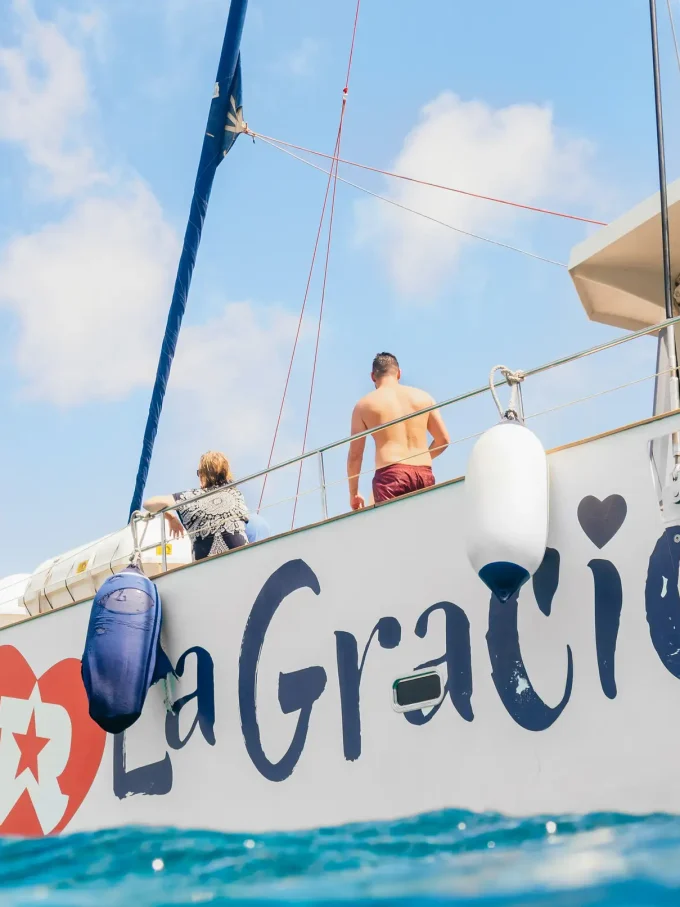
I love La Graciosa
La Graciosa Catamaran Cruise
A Full Day Catamaran Sailing Lanzarote’s Eighth Island Just off the northern tip of Lanzarote lies La Graciosa, the smallest and wildest…
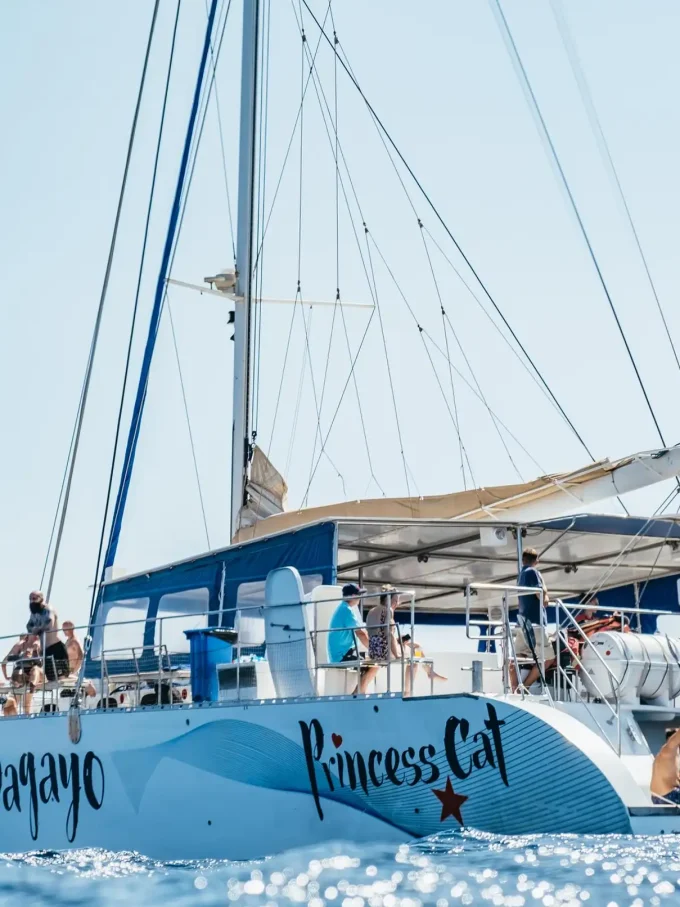
I love Papagayo
Lanzarote Catamaran Cruise
I Love Papagayo Catamaran Cruise. If you only do one boat trip during your holiday on Lanzarote, the I Love Papagayo catamaran…
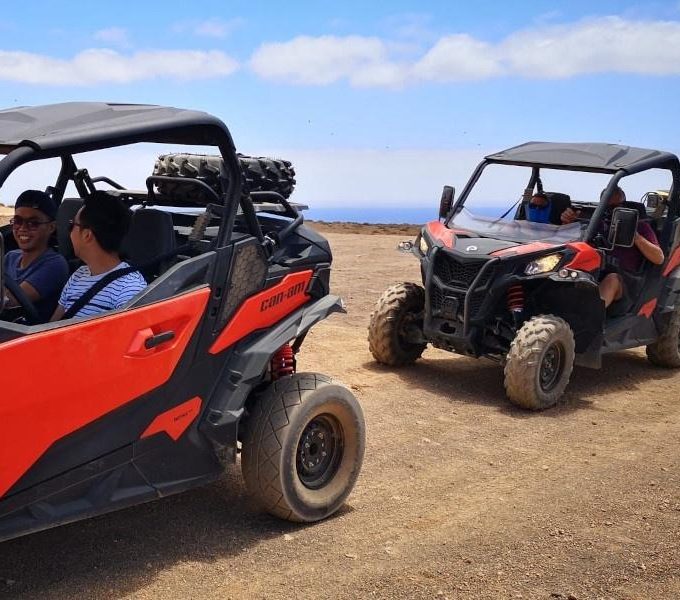
Lanzarote Buggy Tours
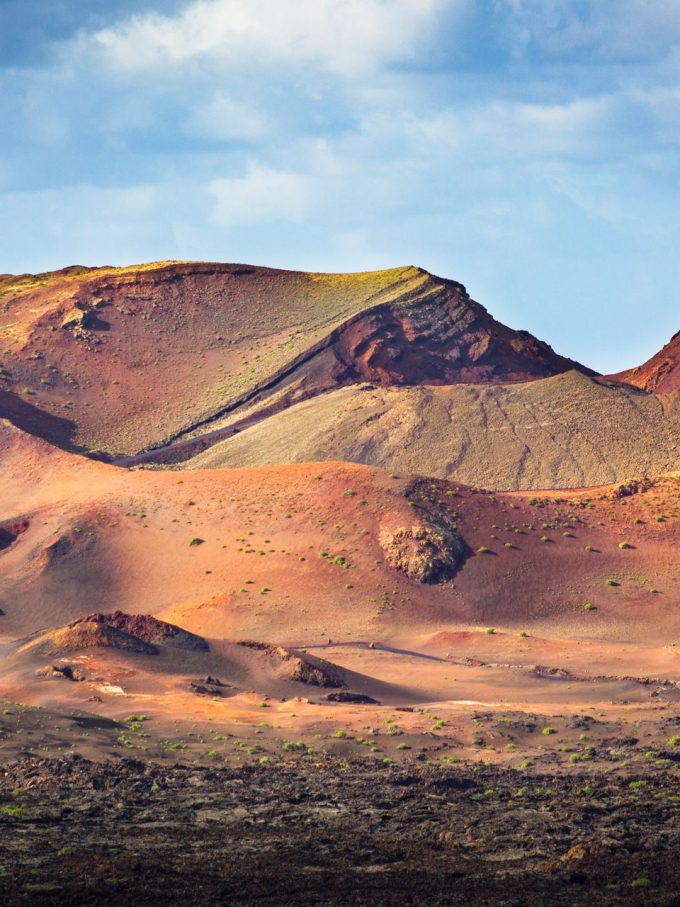
The Timanfaya National Park Short Tour
A Guided Coach Trip Through Lanzarote’s Fire Mountains If there’s one thing you have to see on Lanzarote, it’s Timanfaya. The national…
Things to Do in Lanzarote. The Complete Guide to the Island
Lanzarote packs an extraordinary amount into a small island. In a single week you can climb a volcano, swim at some of the best beaches in Europe, drink wine grown in black volcanic ash, watch cyclists tackle one of the toughest routes on the IRONMAN circuit, hop across to a smaller island that feels untouched by time, eat at a Michelin-recommended restaurant, and finish the day watching the sun set from a cliff-top viewpoint 400 metres above the Atlantic. Few destinations in Europe deliver that kind of range.
Whether you’re planning your first visit or your fifteenth, this guide covers the best things to do in Lanzarote. From the big-name attractions at Timanfaya National Park, Jameos del Agua and the César Manrique sites, through to the beaches at Papagayo, catamaran cruises along the south coast, scuba diving with angel sharks, wine country tours in La Geria, day trips to La Graciosa and Fuerteventura, buggy adventures through the volcanic interior, dolphin spotting cruises, open-air cinema under the stars in Puerto del Carmen and the family-friendly resorts of Playa Blanca and Costa Teguise. Water sports, walks, cycling, dining, nightlife, shopping and cultural events all get proper coverage. Whatever kind of holiday you’re planning, you’ll find something here that fits.
Volcanic Things to See in Lanzarote
Start with the obvious. Timanfaya National Park is the attraction most people associate with Lanzarote and the one absolutely worth making time for. The park was formed by the catastrophic eruptions of the early 18th century that buried entire villages and reshaped a third of the island. The result is a Martian-looking landscape of jet black lava fields, deep red and ochre craters, and ground so hot just metres below the surface that park staff can pour water into a borehole and watch it explode back out as steam within seconds.
The standard visit includes the geothermal demonstrations at the Islote de Hilario and the 14-kilometre Ruta de los Volcanes coach tour. All bookings now run through a timed-entry system on the official CACT Lanzarote website, so plan ahead, particularly during summer and school holidays. Pair the Timanfaya visit with the dramatic cliffs at Los Hervideros, the green saltwater lagoon at El Golfo, and the neighbouring Los Volcanes Natural Park for a full day of volcanic exploration. These are among the most memorable things to do in Lanzarote for first-time visitors.
Wine Tasting in La Geria
Lanzarote produces some of the most distinctive wine in Europe, grown in conditions that look impossible. The La Geria wine region sits in the volcanic interior between Yaiza and Tinajo, where each vine is planted in a hand-dug hollow in the black volcanic ash and protected by a semi-circular stone wall called a zoco. The Ruta del Vino runs the length of the valley and takes in around a dozen wineries, most of which offer tastings and tours.
Bodegas El Grifo, founded in 1775 and the oldest winery in the Canary Islands, has an excellent wine museum alongside the tasting rooms and is the obvious starting point. Bodegas Vega de Yuco won Silver at the Decanter World Wine Awards 2026 for its Princesa Gara Malvasía Volcánica, and both the Masdache winery and its Finca Testeina historic estate welcome visitors. Bodega La Geria, Rubicón and Stratvs all offer different angles on the same volcanic terroir. Combine a morning of tastings with lunch at one of the wine country restaurants for one of the most rewarding day trips on the island.
César Manrique Cultural Attractions
You can’t understand Lanzarote without understanding César Manrique. The artist, architect and environmentalist born in Arrecife in 1919 is the single most influential figure in the island’s modern history, and his insistence that all development should respect the natural landscape is the reason Lanzarote looks the way it does today. Several of his major works are now run as visitor attractions by the CACT.
The Jameos del Agua is a series of volcanic caves transformed into one of the most beautiful concert venues in the world, complete with a turquoise underground lake home to a unique species of blind albino crab. The Cueva de los Verdes is a six-kilometre lava tube with guided tours through dramatically lit underground caverns. The Mirador del Río is a cliff-top viewpoint at the northern tip of the island with breathtaking views across the strait to La Graciosa. The Jardín de Cactus in Guatiza is a spectacular cactus garden built into a former volcanic quarry. The Fundación César Manrique in Tahíche, his former home built into a series of volcanic bubbles, is essentially a private gallery and architectural masterpiece in one. Get a multi-site ticket and work through them at your own pace.
Best Beaches to Visit in Lanzarote
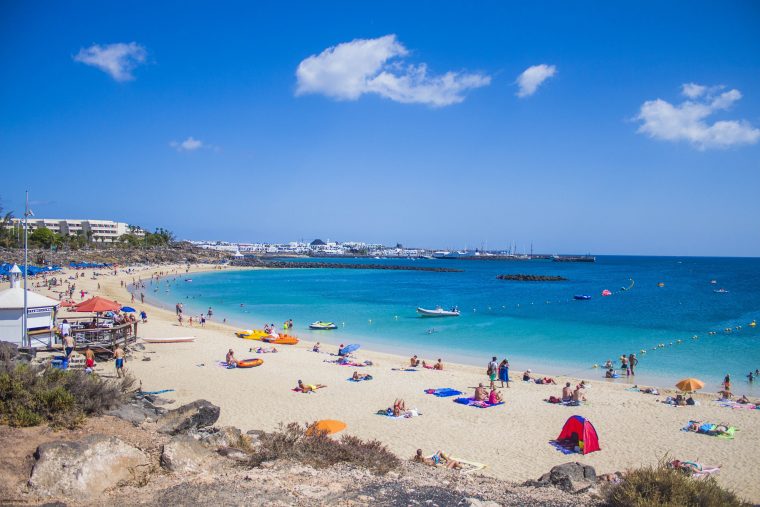
The beaches on Lanzarote vary dramatically by location. Playa Papagayo near Playa Blanca is the most famous beach on the island, a series of small golden sand coves separated by low cliffs, offering some of the cleanest swimming water anywhere in the Canaries. Access is via a rough dirt road with a small entry fee per vehicle, and arriving early is essential during summer.
Famara in the north-west is a vast crescent of golden sand beneath dramatic cliffs, home to the island’s surf and kitesurf scene. The resort beaches of Playa Grande in Puerto del Carmen, Playa Blanca and Las Cucharas in Costa Teguise are family-friendly with full facilities. Playa Quemada is a quiet former fishing village with a pebble beach and excellent seafood restaurants. El Golfo delivers black volcanic sand and dramatic scenery. Playa Mujeres near Playa Blanca offers calmer waters and easier access than Papagayo. Between them, the island’s beaches cover every type of coastal experience you could want.
Catamaran Cruises and Boat Trips
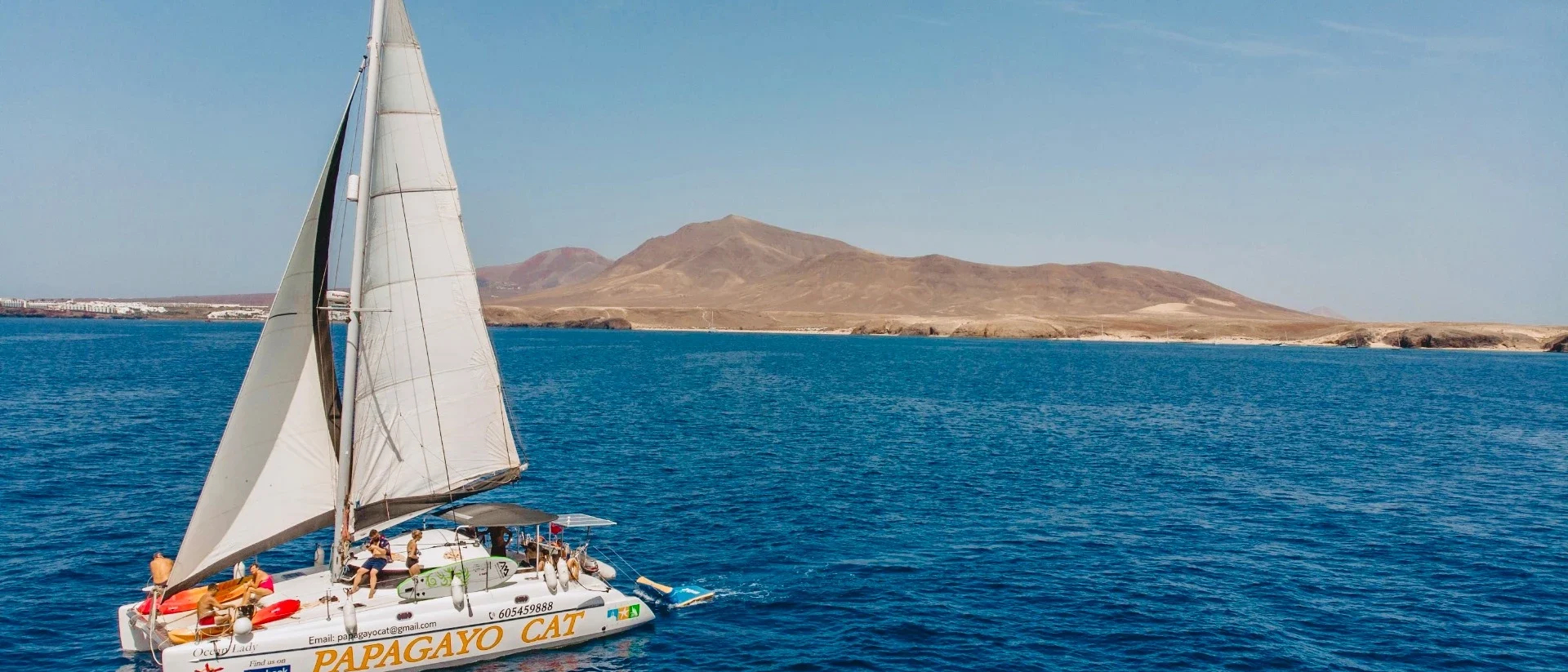
Catamaran cruises are one of the most popular ways to see the coast of Lanzarote, and the standard day trips run from Puerto del Carmen, Puerto Calero and Playa Blanca down to the Papagayo coast. Prices for shared group trips typically start from around €66 per adult for a four to five hour excursion, with hotel pickup available for an extra fee. Most cruises include a welcome drink, an open bar with beer, sangria and soft drinks, a paella or tapas lunch, snorkelling equipment, kayaks and stand-up paddleboards, and a swim stop at anchor in the Papagayo bays.
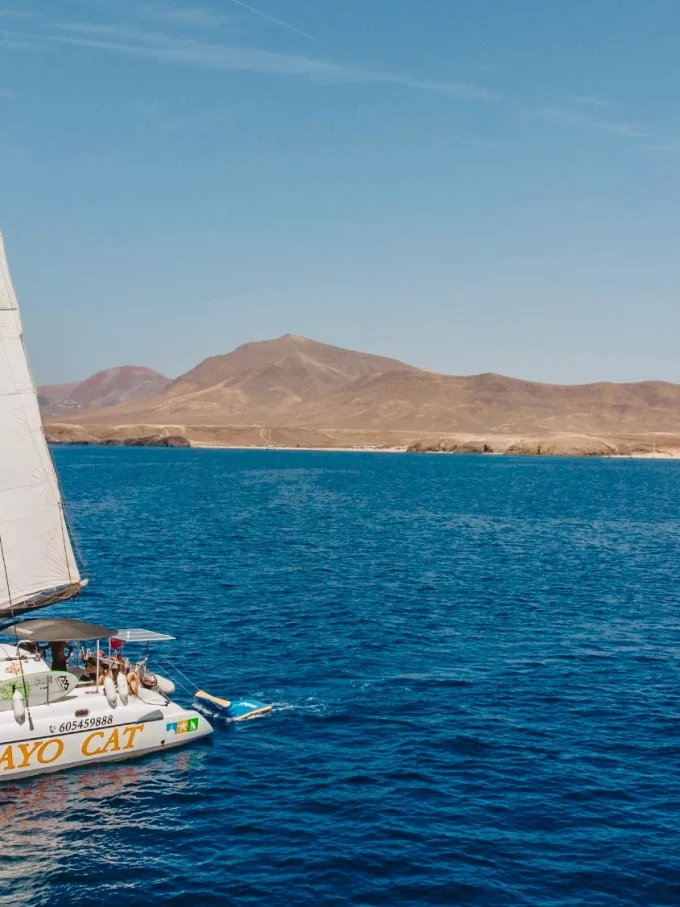
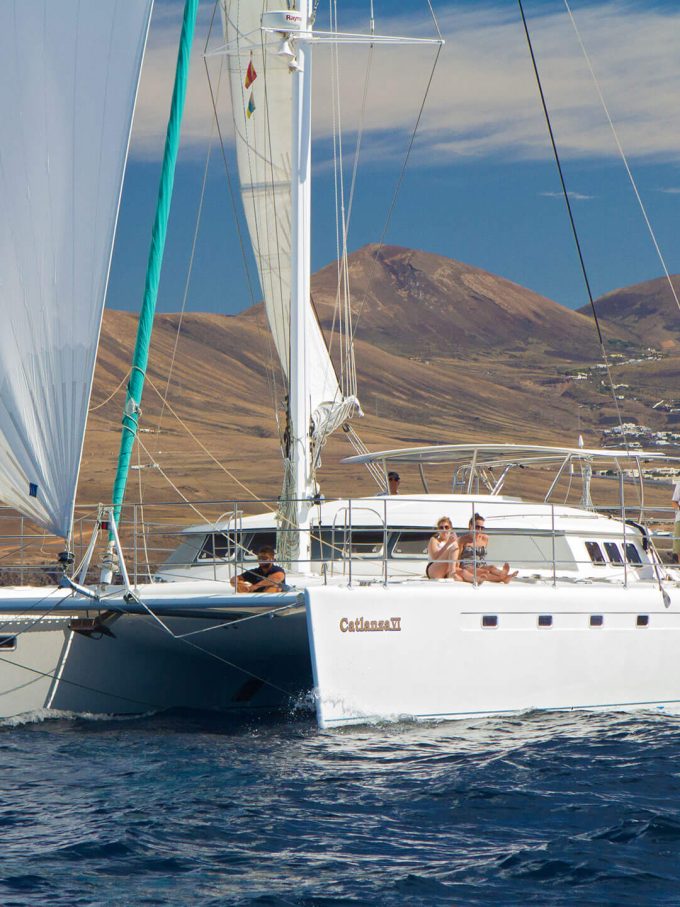
Popular options include the I Love Papagayo catamaran from Puerto del Carmen, the Papagayo Cat and Ocean Lady from Playa Blanca, and Catlanza’s shared and private charters from Puerto Calero. Private catamaran hire for groups of up to 12 people ranges from around €450 for a two-hour cruise to €1,800 for a full day, which often works out better value than individual tickets for families and larger groups. Adults-only cruises are available if you want a more grown-up atmosphere, and sunset cruises deliver a shorter romantic option for couples typically running around two to three hours in the late afternoon and evening.
Dolphin Spotting Cruises
The waters around Lanzarote are home to bottlenose dolphins, common dolphins, and occasional sightings of pilot whales and other species passing through. Dolphin spotting cruises run from Puerto del Carmen, Puerto Calero and Playa Blanca on a daily basis, with trips typically lasting between two and three hours. Sightings are common but never guaranteed, and reputable operators use eco-friendly practices that keep a respectful distance from the animals.
The best conditions for spotting dolphins are calm mornings, and the strait between Lanzarote and Fuerteventura is one of the more reliable areas for encounters. Some operators combine dolphin watching with a sunset cruise for an especially rewarding evening on the water, with sparkling wine served on deck as the sun goes down. Prices for shared dolphin spotting trips typically start from around €30 to €50 per person.
Fishing Trips
Deep sea fishing charters run from Puerto Calero and Puerto del Carmen year-round, targeting species including tuna, wahoo, marlin, barracuda, dorado and amberjack depending on the season. Shared fishing trips typically start from around €70 per person for a four-hour excursion, with all rods, tackle, bait and licences included. Private charters for groups of up to six anglers start from around €450 for half a day and €800 for a full day.
The peak season for the big pelagic species runs from May through October, with billfish more common in the summer months. Shore fishing along the coasts around Playa Blanca, Órzola and the northern beaches is also popular, though a Canary Islands fishing licence is required and can be obtained online through the regional government website. Most fishing charters welcome complete beginners and provide instruction alongside the more experienced anglers on board.
Scuba Diving and Snorkelling
Lanzarote is one of the best diving destinations in Europe, with clear Atlantic water, dramatic volcanic underwater scenery, and one of the most important remaining populations of the critically endangered angel shark. The main dive centres cluster in Puerto del Carmen, Playa Blanca and Puerto del Carmen, with Playa Chica in Puerto del Carmen widely regarded as one of the finest shore dives in Europe.
Angel shark sightings run from October through March during the breeding season, when the sharks move into the shallow coastal waters to give birth. Other regular sightings include rays, moray eels, octopus, barracuda, groupers and a huge variety of smaller reef fish. Introductory dives for complete beginners start from around €70 to €90 and take place either from shore or a small boat, with full instruction and equipment included. Certified divers can join guided dives from around €40 per dive with all equipment, or complete a full PADI Open Water certification course over three to four days from around €400. Snorkelling trips run from most of the same beaches and are considerably cheaper, with equipment rental available at most of the resort beach kiosks.
Buggy Tours and Off-Road Adventures
Buggy and quad tours are widely marketed across the island, though it’s worth noting the current legal position. The Cabildo has been actively enforcing rules that prohibit organised convoys on rural land and within protected natural areas, with the first major fine issued in late 2025 and a further ban due to be introduced by August 2026. Reputable operators run tours on public roads and legally authorised routes, and any tour that stays on the public road network remains legal and safe.
Buggy tours from Puerto del Carmen and Puerto Calero typically last around 2.5 hours and cover a mix of on-road and legal off-road driving, with photo stops at scenic viewpoints and local guides pointing out the landscape. Prices start from around €70 per person for a two-seater buggy with a passenger. Longer half-day tours cost around €120 to €150 and cover more ground. If you book a buggy or quad tour, ask the operator directly to confirm the route stays within legal boundaries and that they hold the necessary municipal authorisation. Jeep safari tours offer a similar experience with proper licensing and typically include lunch and stops at several major landmarks across a full day.
Day Trips to La Graciosa
Take the ferry from Órzola across to La Graciosa, officially recognised as the eighth Canary Island since 2018. No asphalt roads, around 700 residents, and some of the most stunning beaches in the entire archipelago. The ferry runs every 30 to 60 minutes depending on the season, the crossing takes about 25 minutes, and a return foot-passenger ticket costs around €26. The arrival port is Caleta del Sebo, a sleepy fishing village with a few restaurants, a couple of shops, and bicycle rental places ready to kit you out for the day.
The beaches are what make the trip. Playa de las Conchas on the western side of the island is one of the most beautiful beaches anywhere in the Canaries, with white sand, turquoise water and the dramatic backdrop of Montaña Bermeja. Playa Francesa is calmer and safer for families. Bicycle rental costs around €10 to €15 a day and is the best way to reach the more remote beaches, though 4×4 taxis also run from Caleta del Sebo. Alternatively, catamaran excursions from Puerto del Carmen and Playa Blanca offer a fully organised day around the island with lunch and drinks included, priced from around €90 to €120 per adult.
Day Trips to Fuerteventura
Fuerteventura sits about an hour south of Lanzarote by ferry from Playa Blanca to Corralejo. The two main operators, Líneas Romero and Naviera Armas, run multiple daily crossings, and a return foot-passenger ticket costs around €30 to €35 depending on the operator. The crossing itself is short and the schedule allows for a comfortable day trip from any of the Lanzarote resorts.
Corralejo at the northern tip of Fuerteventura is a busy resort town with a long beach, a lively harbour and plenty of restaurants. The real draw for a day trip is the Parque Natural de las Dunas de Corralejo, a vast white sand dune system that stretches south along the coast for kilometres. Guided excursions from Lanzarote typically include the ferry, coach transport around the northern part of the island, stops at the dunes and time in Corralejo, and cost around €70 to €90 per adult. Independent travellers can take the ferry alone and rent a car in Corralejo for around €30 to €40 a day. Day trips to the tiny volcanic island of Lobos also run from both Corralejo and Playa Blanca, with visitor numbers capped to protect the fragile ecosystem, so booking ahead is essential.
Water Sports to Try in Lanzarote
Lanzarote’s combination of consistent trade winds, warm water and varied coastline makes it one of the best water sports destinations in Europe. Famara is the heart of the surf and kitesurf scene, with several long-established schools offering lessons for all levels and equipment rental for experienced riders. Beginner surf lessons run from around €40 to €50 per person for a group session, with private lessons and multi-day packages available.
Costa Teguise is the main windsurfing centre, with the bay between Playa de las Cucharas and Playa del Jablillo offering ideal conditions for learners and intermediates. Jet ski hire is widely available from Puerto del Carmen, Playa Blanca and Costa Teguise, with guided coastal tours typically lasting 30 to 60 minutes and ranging from about €60 to €120 depending on duration. Kayaking, stand-up paddle boarding and snorkelling are all easy to organise from the same beachfront operators. Parasailing runs from most of the main resort beaches in summer, priced from around €50 per person for a 10-minute ride.
Walks and Hikes in Lanzarote
The island rewards walkers with a surprising variety of terrain. Caldera Blanca, a perfectly formed white-walled volcanic crater near Mancha Blanca, is the most popular hike on the island. The full circuit takes around three to four hours and includes the option of walking around the entire crater rim, with views across the whole northern half of the island.
The Risco de Famara cliff walk in the north-west offers spectacular views across to La Graciosa. Los Ajaches south of Playa Blanca delivers gentler terrain with views back to Fuerteventura. The Pico Redondo loop in the south offers another accessible volcanic hike. For something more gentle, the coastal path between Puerto del Carmen and Puerto Calero is an easy two-hour walk along the cliffs with the option to return by water taxi or local bus. Cycling is at its best during the winter and spring months, with the island internationally recognised as one of the best cycling training destinations in Europe.
Shopping in Lanzarote
Shopping on Lanzarote splits broadly into three categories. The resort areas of Puerto del Carmen, Playa Blanca and Costa Teguise have the usual mix of tourist shops, beach gear and leather goods, gathered into walkable shopping complexes like the Centro Comercial Biosfera and Centro Comercial Marítimo in Puerto del Carmen and the Centro Comercial Rubicón in Playa Blanca.
For more interesting shopping, head into Arrecife. The pedestrianised Calle León y Castillo and the surrounding streets have a much wider range of Spanish high street fashion, jewellery, leather and homeware. The Sunday market at Teguise is the must-visit market on the island, running from 9am to 2pm in the historic former capital with hundreds of stalls selling local crafts, handmade jewellery, ceramics, food, live music and one of the best mornings out of the week. The Haría craft market on Saturday mornings is smaller but focused on genuine local makers. For Lanzarote wines, the bodegas in La Geria all sell direct at better prices than resort shops, and the sea salt from the Janubio salt flats makes a distinctive local souvenir.
Open Air Cinema in Puerto del Carmen
One of the more unusual evening options on the island is the Starlight Open Air Cinema on the rooftop of the Biosfera Plaza shopping centre in Puerto del Carmen. Blockbuster films are shown nightly under the Atlantic stars, with comfortable reserved seats, wireless headphones (with English and Spanish audio at the switch of a button), cosy blankets, a giant canopy for rain protection, and a full push-button waiter service delivering food and drinks to your seat throughout the film.
The standard adult ticket costs €25, with children up to 14 years priced at €20. The Movie and Meal package including a two-course American-themed dinner and popcorn costs €38 per adult and €34 per child. The rooftop opens about an hour before the film starts (typically 8pm), giving you time to enjoy the sunset and a cocktail before the show. Booking is strongly recommended as popular films sell out well in advance. The venue is wheelchair accessible via the rear entrance on level 5, and the same complex also houses the Rooftop Biosfera restaurant, a 6D flying cinema and a Jurassic-themed crazy golf course for a full evening out.
Eating, Drinking and Nightlife in Lanzarote
The Lanzarote food scene has matured significantly over the past decade. Alongside the predictable resort restaurants you’ll find genuine destination dining at the high end, an excellent network of family-run local places, and a thriving seafood scene. Look for restaurants serving papas arrugadas with mojo verde and rojo, fresh grilled fish, queso asado, and goat stew. La Tegala in Mácher and Lagomar in Nazaret are at the higher end and worth dressing up for. The fishing villages of El Golfo, Puerto del Carmen, Playa Blanca and Playa Quemada all have excellent seafood options where the fish is genuinely landed locally.
Puerto del Carmen is the centre of the island’s nightlife, particularly along Avenida de Las Playas, with a mix of bars, clubs and live music venues that stay open into the early hours. The marinas at Puerto Calero and Marina Rubicón offer a more refined evening atmosphere with cocktail bars, waterfront restaurants and occasional live music. Costa Teguise sits somewhere between the two. Arrecife’s Charco de San Ginés area is increasingly popular for evening tapas away from the resort crowd.
Family Things to Do in Lanzarote
Aqualava Waterpark in Playa Blanca is the main water park on the island, with a good mix of slides for all ages, a wave pool, a lazy river and proper shaded areas. Adult tickets are around €30 with discounts for children. Rancho Texas Lanzarote Park in Puerto del Carmen combines a small zoo with a swimming pool complex, animal shows including parrots and birds of prey, and pony rides for younger children.
Submarine Safari at Marina Rubicón takes paying passengers down to around 30 metres in a real submarine for a 50-minute tour of the seabed off Playa Blanca. Pirate Mini Golf in Costa Teguise and Playa Blanca offers a fun evening activity for families. The Jurassic-themed crazy golf course at Rooftop Biosfera in Puerto del Carmen sits alongside the open-air cinema and 6D flying cinema for a full family evening out. These make some of the best family things to do in Lanzarote outside of the beach.
Cultural Things to See in Lanzarote
Beyond the Manrique sites, the island has a quiet but genuine cultural depth. The Castillo de Santa Bárbara above Teguise houses the Museo de la Piratería, telling the story of the pirate raids that shaped the island’s history. The Casa Museo del Campesino in San Bartolomé, also designed by Manrique, celebrates the agricultural traditions of the island. The Museo Etnográfico Tanit in San Bartolomé is privately run and absolutely worth the visit, with a vast collection of artefacts from traditional rural Canarian life.
The main annual events include the IRONMAN Lanzarote in May, Día de Canarias on 30 May, San Juan on 23 June, the Fiestas del Carmen in Playa Blanca on 16 July and Puerto del Carmen in mid-August, and the Three Kings Parade on 5 January. Any of these adds an extra dimension to a trip planned around them. Watching a UD Lanzarote football match at the Estadio Municipal Ciudad Deportiva Lanzarote in Arrecife is one of the more interesting low-key things you can do on the island, with ticket prices a fraction of mainland Spanish football.
Planning Your Time on the Island
A week on Lanzarote is enough to comfortably cover the major Manrique sites, Timanfaya, a day in La Geria, a day on La Graciosa, a couple of beach days, a catamaran cruise and a few good meals. Two weeks lets you add Fuerteventura, more hiking, buggy tours, diving, the smaller museums and a genuinely relaxed pace. Whatever length of stay you have, the single piece of advice worth giving any first-time visitor is to leave at least one day completely unplanned. Some of the best memories of any Lanzarote holiday come from setting out in the morning without knowing where you’ll end up, following a road into the interior, finding a village restaurant for lunch, and letting the afternoon unfold from there.
With so many things to do in Lanzarote across such a small area, planning a trip becomes less about finding activities and more about deciding what to leave out. Explore the individual guides below for deeper detail on each of the areas covered above, from the volcano tours and wine tastings to the catamaran cruises, scuba diving, day trips, family attractions and evening entertainment that make Lanzarote one of the most rewarding holiday destinations in Europe.