How to Visit La Graciosa
| Ferry from Orzola to La Graciosa | |
| I Love La Graciosa Catamaran |


Bookings are made directly with the tour company. Prices, availability and any changes or refunds are handled by them, so please send booking questions their way rather than to Discover Lanzarote.
The Eighth Canary Island
Just off the northern tip of Lanzarote lies one of the most special places in the whole of the Canaries. La Graciosa is a tiny, unspoilt island with no paved roads, barely a car in sight, sandy streets and some of the most beautiful beaches you’ll find anywhere. Officially recognised as the eighth Canary Island back in 2018, it’s a wild, peaceful, timeless sort of place, and crossing the short stretch of water to reach it feels like stepping back a few decades. It makes a wonderful day trip from the busier resorts, and an even better overnight escape if you can spare the time. Here’s everything you need to know to plan your visit.
La Graciosa sits across a narrow channel of water called El Río from the north coast of Lanzarote, part of the protected Chinijo Archipelago, which is the largest marine reserve in Europe. It’s small and mostly flat, around 29 square kilometres of sand, volcanic cones and scrub, with just two settlements: the main village and port of Caleta de Sebo, where the ferry arrives, and the tiny hamlet of Pedro Barba. Fewer than a thousand people live here, and the whole island has a slow, barefoot rhythm that’s become very hard to find anywhere else. There are no big hotels, no traffic lights, no chain restaurants, just whitewashed houses, sandy lanes, fishing boats and an awful lot of sky.
How to get to La Graciosa from Lanzarote
The only way to reach La Graciosa is by ferry from the little port of Órzola, at the very northern tip of Lanzarote. Two companies, Líneas Romero and Biosfera Express, run the crossing between them, with frequent departures throughout the day, all year round, so you rarely wait long for a boat. The trip takes around 25 minutes across El Río, with the towering Famara cliffs behind you as you go, and it’s a lovely little journey in its own right. It’s well worth booking your tickets in advance in the busy summer months, when the ferries and the queues at Órzola are at their fullest.

If you’re driving up to Órzola, there’s free parking near the harbour where you can leave the car for the day, since you won’t need it on the island. Órzola is around 35 kilometres from Arrecife and the airport, and the drive from the main resorts takes roughly 30 to 35 minutes from Costa Teguise, a little more from Puerto del Carmen, and around 45 to 50 minutes from Playa Blanca in the south. If you’d rather not drive at all, plenty of organised day trips include return transfers from your resort along with the ferry.
Getting around La Graciosa
This is the thing that makes La Graciosa so special: there are no cars for visitors and no paved roads, just sandy, volcanic tracks. So once you step off the ferry, you get around under your own steam, and that’s half the charm. The nearest beaches and the village itself are easily explored on foot. For the beaches further out, the most popular option is to hire a bike in Caleta de Sebo, with rental shops near the port charging somewhere around 10 to 15 euros for the day. Do bear in mind the tracks are sand and loose stone rather than smooth tarmac, so it’s harder going than a normal cycle, and a bike with chunky tyres helps.
If pedalling across sand in the heat doesn’t appeal, the island’s licensed 4×4 taxis, the jeep-taxis, run to the further-flung beaches for a set fare and can be arranged right at the port. Whichever way you choose, take plenty of water, sunscreen and a hat, as much of the island is open and exposed with little shade, and distances that look short on a map take longer than you’d think across soft ground.
The Incredible La Graciosa Beaches
For most people, the beaches are the whole point of La Graciosa, and they’re genuinely among the finest and least spoilt in the Canaries. The most famous is Playa de las Conchas, a broad, wild sweep of golden sand on the north-west coast, backed by dunes and looking out to the islet of Montaña Clara, with the red cone of Montaña Bermeja rising beside it. It’s breathtakingly beautiful, though the currents here can be strong, so it’s one for admiring and paddling rather than serious swimming.

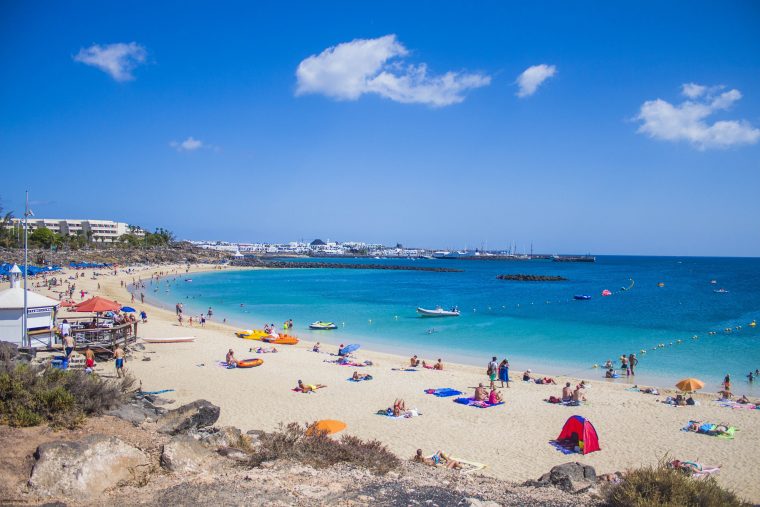
For safe, calm bathing, head instead to the cluster of beaches south of the village. Playa Francesa is a gorgeous, sheltered bay with clear, shallow, turquoise water, ideal for swimming and a favourite lunch stop for the boat trips, and nearby Playa de la Cocina sits beneath the little volcano of Montaña Amarilla, which you can climb for wonderful views. Closer to the port, the lagoon-like Playa del Salado is calm and safe enough for children. The walk south from Caleta de Sebo taking in these beaches, with the option of scrambling up Montaña Amarilla, is the classic La Graciosa outing, and an easy, beautiful one.
Where to eat in Caleta de Sebo

Caleta de Sebo may be tiny, but it’s well set up for a good lunch, and eating here is a real pleasure. The village has a handful of relaxed bars and restaurants, several looking out over the harbour, and the thing to order is the fish, landed locally and about as fresh as it gets, along with island rice dishes and the odd glass of Canarian wine. It’s simple, honest, unpretentious cooking in a lovely setting.
One practical tip worth knowing: there are no restaurants or shops out at the beaches, so if you’re heading off to Las Conchas or spending the day exploring, either eat in the village first or take a picnic and plenty of water with you.
Staying the night in La Graciosa
Most people visit La Graciosa on a day trip, and you can certainly see a lot in a day. But if you possibly can, staying a night or two is magical, because the island takes on a completely different character once the day-trippers have caught the last ferry back and the crowds melt away.
Accommodation is limited and low-key, a scattering of apartments and small guesthouses in Caleta de Sebo rather than any hotels, so you’ll need to book well ahead, particularly in summer. Spend an evening watching the sun go down over the water with Lanzarote in the distance, eat fresh fish by the port, and wake to empty beaches, and you’ll understand why people fall so hard for the place.
La Graciosa Boat Trips and Days Out
How to Visit La Graciosa
| I Love La Graciosa Catamaran |
Bookings are made directly with the tour company. Prices, availability and any changes or refunds are handled by them, so please send booking questions their way rather than to Discover Lanzarote.
One of the best ways to experience La Graciosa, especially if you’re short on time, is by boat. La Graciosa Catamaran and sailing trips run across from Lanzarote, typically cruising the island’s stunning coastline and dropping anchor at the sheltered beaches like Playa Francesa for swimming, snorkelling and lunch on board.

These are a brilliant, relaxed way to see the prettiest corners of the island and its crystal-clear waters without the logistics of ferries and bikes, and many include return transfers from the main resorts. If you’d rather explore under your own steam, the simple ferry-and-bike combination is hard to beat, but for a real treat, a day sailing around La Graciosa is one of the finest excursions on offer anywhere on Lanzarote.
When is The Best Time To Go To La Graciosa?
La Graciosa is a year-round destination thanks to the Canaries’ mild climate, though the most comfortable months tend to be spring and autumn, when it’s warm but not baking. July and August are the busiest by far, with the fullest ferries and the highest demand for the island’s limited beds, so if you want it at its most peaceful, aim for either side of the peak. Whenever you come, pack for a day outdoors: swimwear, sturdy shoes or trainers for the sandy tracks, sunscreen, a hat and, most importantly, plenty of water, as it’s a wild island with few facilities once you leave the village. Take some cash too, as not everywhere takes cards.
In a part of the world that sees a great many visitors, La Graciosa remains a rare thing: somewhere genuinely unspoilt, quiet and wild, where the pace slows right down and the beaches feel like they belong to another age. It takes only 25 minutes on a boat to get here, but it feels a world away from the resorts. Come for the day to swim in the turquoise water, cycle the sandy tracks and eat fresh fish by the harbour, or stay a night or two to have those extraordinary beaches almost to yourself. Either way, La Graciosa is one of the most memorable experiences Lanzarote has to offer, and for many people it turns out to be the highlight of the whole trip.