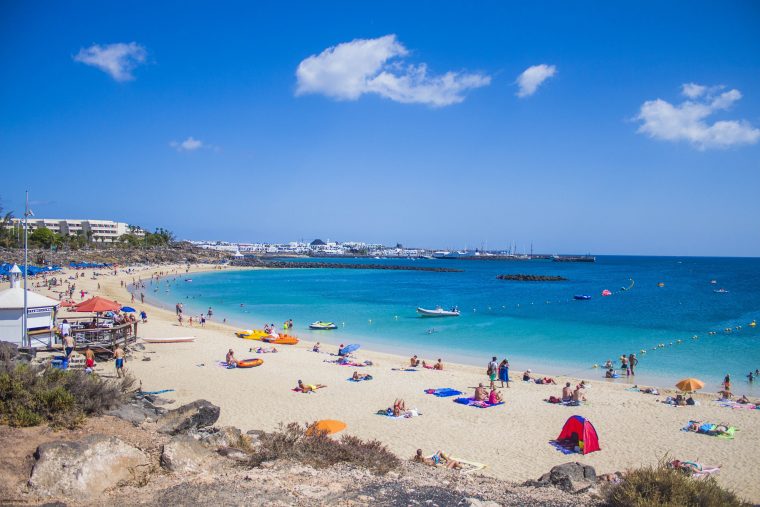
One of the things that sets Lanzarote apart from other sun-and-beach destinations is a single, remarkable fact: the entire island is a UNESCO Biosphere Reserve. Not a corner of it, not a national park within it, but the whole island, towns and all. It’s a status the island has held since 1993, and it’s the key to understanding why Lanzarote looks and feels so different from anywhere else, no high-rise sprawl, no neon strips, but low white villages, protected volcanic landscapes and a deep, deliberate harmony between people and nature.
This is the story of how that came to be, what it actually means, and why it still matters to every visitor today.
What UNESCO Status Does Lanzarote Actually Have?
A Biosphere Reserve, in UNESCO’s own terms, is a place that aims to reconcile the conservation of nature with sustainable human development, somewhere the relationship between people and their environment is treated as something to be protected and nurtured rather than paved over. The Geopark status, held jointly by Lanzarote and the Chinijo Archipelago, recognises the island’s internationally important volcanic geology, more than fifteen million years of eruptions, erosion and landscape-building written into the rock. Together, the two designations celebrate both the natural drama of the island and the way its people have lived alongside it.

What made Lanzarote’s 1993 designation genuinely groundbreaking wasn’t just that it became a Biosphere Reserve. It was that it became the first time a whole inhabited island, including its towns and centres of population, was designated one. Most protected areas are wild, empty places fenced off from human life. Lanzarote’s status was different, and radical: it recognised the island precisely because of the relationship between its people and its harsh volcanic land, not in spite of it.
That relationship is visible everywhere once you know to look for it. The clearest example is in the vineyards of La Geria, where farmers, faced with almost no rainfall and constant wind, developed the extraordinary technique of planting each vine in its own hollow scooped from the black volcanic ash, sheltered by a low curved wall of stones. The ash traps the scarce moisture and the walls break the wind, turning a seemingly barren lava field into one of the most unusual and productive wine regions on earth. It’s this kind of ingenuity, people working with a difficult landscape rather than against it, that lies at the heart of why UNESCO recognised the island.
César Manrique and the Vision Behind It
No account of Lanzarote’s UNESCO status is complete without César Manrique. It’s no exaggeration to say the island owes its Biosphere Reserve designation largely to one man and his vision. Returning to his home island after years in Madrid and New York, Manrique arrived at a moment of danger, the early tide of mass tourism that had already covered stretches of other Spanish coastlines in high-rise concrete was beginning to lap at Lanzarote.
César Manrique fought for a different path. Artist, architect, environmentalist and tireless campaigner, he championed the idea that development and nature could coexist, that buildings should be low, white and in keeping with tradition, that the volcanic landscape was an asset to be treasured rather than a blank canvas for hotels. His influence shaped island planning policy, kept the high-rises at bay, and produced the string of extraordinary art-and-nature attractions, from Jameos del Agua to the Mirador del Río, that define Lanzarote today. When UNESCO granted Biosphere status in 1993, just a year after Manrique’s death, it was in large part a recognition of the island he had fought to protect.
A Protected Ocean
It’s easy to think of Lanzarote’s UNESCO status as being all about the land, the volcanoes, the vineyards, the lava fields, but the sea is every bit as central to it. The Biosphere Reserve and the Geopark both extend well beyond the shoreline to protect a vast area of ocean, and the waters around Lanzarote are among the richest in biodiversity in the whole of the Canary Islands. This is a protected ocean as much as a protected island.
The jewel of it lies to the north. The Marine Reserve of the Chinijo Archipelago, taking in La Graciosa and the smaller islets of Alegranza, Montaña Clara, Roque del Este and Roque del Oeste, covers some 70,700 hectares, making it the largest marine reserve in Europe. Its richness is no accident. The island sits close to the great Saharan upwelling off the African coast, where deep, cold, nutrient-heavy water rises to the surface, and those nutrients feed an entire web of life. Add the crevice-filled volcanic reefs, the underwater lava formations, the seagrass meadows and the algae forests, and you have a seabed teeming with sponges, corals, crustaceans and fish, from bream and grouper to the shier creatures hiding in the rock.

Those productive waters draw larger visitors too. More than a dozen species of cetacean, resident and migratory, move through these seas, including several kinds of dolphin and passing whales, and the area is an important transit point for migrating sea turtles, most notably the loggerhead. The strait of La Bocaina between Lanzarote and Fuerteventura is a particular hotspot, its seagrass beds and rich waters sheltering turtles, dolphins and pelagic fish like tuna and marlin. It’s this abundance of marine life that makes the waters off Puerto del Carmen and Playa Chica some of the best diving in the Canaries, and that gives the boat trips and dolphin-watching excursions from the island’s harbours a genuine chance of a memorable encounter.
The islets are just as important above the waterline. The rich seas feed enormous colonies of seabirds, and the Chinijo is recognised as a Special Protection Area for Birds, home to the largest colony of Cory’s shearwater in all of Spain, along with rare and threatened species such as the white-faced storm petrel, Eleonora’s falcon and the osprey. Between the seabed, the sea itself and the birdlife of the cliffs and islets, the marine side of Lanzarote’s protected status is a natural treasure in its own right, and a big part of why the island earned, and keeps, its place on the UNESCO map.
The Biosphere ethos
The Biosphere ethos is written into how the island is run and, crucially, into what you see as a visitor. Strict planning controls limit building heights and urban sprawl, which is why you’ll find no towering hotel blocks and why the resorts stay low-rise and relatively restrained. A large proportion of the island’s territory, over 40 percent, is formally protected under Canarian conservation law, safeguarding the volcanic landscapes, the coastlines and the wildlife. Tourism is deliberately concentrated in a handful of main resorts, leaving vast swathes of the island wild and unspoilt.
The result is the Lanzarote that visitors fall for: an island where you can drive from a resort into what feels like a lunar wilderness in minutes, where the villages are whitewashed and low, where the vineyards look like nowhere else on the planet, and where the landscape, not the development, is always the star. That distinctive, uncluttered character is not an accident. It’s the direct product of the choices that earned and sustain the island’s UNESCO status.
Where to See the Biosphere at Its Best
The whole island is the reserve, but a few places capture its spirit especially well. Timanfaya National Park is the raw geological heart of it, a still-warm expanse of craters and lava from the great eruptions of the 1730s, and the clearest expression of the volcanic forces the Geopark celebrates. La Geria shows the human side, the ingenious ash-hollow vineyards that embody the people-and-nature relationship UNESCO recognised. The Chinijo Archipelago and the island of La Graciosa to the north, part of the same protected area, form the largest marine reserve in Europe and a haven for birdlife. And the Manrique sites, from Jameos del Agua to the Jardín de Cactus, show how art, architecture and volcanic nature can be woven together, the very philosophy that saved the island.
The Islands Commitment
Holding UNESCO Biosphere status is not a one-off prize but an ongoing commitment, and it’s fair to say the island has had to work to live up to it. In the decades since 1993, the pressures of tourism, development and the demands on water and infrastructure have tested that commitment, and there have been real debates on the island about how to balance a tourism-dependent economy with the conservation ideals at the heart of the Biosphere. Those conversations continue today, as Lanzarote weighs growth against the quality of life for residents and the protection of the landscape that draws visitors in the first place.
For the traveller, though, the takeaway is a happy one. When you choose Lanzarote, you’re choosing an island that made a deliberate, decades-long decision to protect what makes it special, and you get to enjoy the result: a place of genuine natural wonder, distinctive character and rare beauty, cared for as few holiday islands are. That’s what the UNESCO label really means here, and it’s a big part of what makes a Lanzarote holiday feel different from the moment you arrive.